Opinion by Ricky Bakker
The claim is exclusive and intentionally so. Jesus did not say He was one of the ways to God; He said He was the way.
In a culture that prizes tolerance above truth, that statement is offensive. It is also, according to Scripture, non-negotiable.
Start with the words of Jesus in John 14:6 (CSB): “I am the way, the truth, and the life. No one comes to the Father except through me.”
Three definite articles. One Person. No exceptions. Jesus is not offering a philosophical framework or a spiritual preference. He is making a singular, exclusive claim that every other path to God is a dead end. This verse alone rules out universalism, pluralism, and the idea that sincere effort in any religion leads to heaven.
The question is not whether the claim is narrow — it clearly is. The question is whether the One making it has the authority to make it, and Scripture answers that emphatically.
Before the solution makes sense, the problem must be understood. Romans 3:23 (CSB) is unambiguous: “For all have sinned and fall short of the glory of God.”
All means all — no exemptions for good intentions, religious devotion, charitable giving, or moral effort.
The standard is the glory of God, perfect, holy, and untarnished, and every human being falls short of it. The consequence is not a second chance by default. Romans 6:23 (CSB) is direct: “For the wages of sin is death, but the gift of God is eternal life in Christ Jesus our Lord.”
Sin has a payment. That payment is death — physical, spiritual, and eternal separation from God. Heaven is not humanity’s default destination. It must be entered through a door, and that door has a specific name.
Other religious figures taught. Jesus claimed to be the answer. No other religious leader claimed to be sinless, to forgive sin with personal authority, to rise from the dead, or to be the singular mediator between God and man.
Acts 4:12 (CSB) closes every other door: “There is salvation in no one else, for there is no other name under heaven given to people by which we must be saved.” Peter spoke those words before hostile religious leaders who had every political reason to silence him. He did not qualify it. He did not soften it. There is no other name.
Jesus is uniquely qualified because salvation requires a substitute — one who could bear the full weight of divine judgment for sin. That substitute had to be fully human to stand in humanity’s place, and fully God to satisfy an infinite standard of justice.
Jesus alone meets both conditions. 1 Timothy 2:5 (CSB) states it plainly: “For there is one God and one mediator between God and humanity, the man Christ Jesus.” One mediator. Not one of many. One.
Salvation through Christ is not a slogan. It is grounded in historical, substitutionary sacrifice. Isaiah 53:6 (CSB) foretold it centuries before the cross: “We all went astray like sheep; we all have turned to our own way; and the LORD has punished him for the iniquity of us all.”
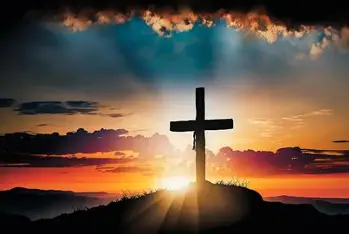
On the cross, the punishment that belonged to every human being was placed on Jesus. 2 Corinthians 5:21 (CSB) captures the exchange: “He made the one who did not know sin to be sin for us, so that in him we might become the righteousness of God.” Jesus took sin.
Believers receive righteousness. No religious system, moral code, or spiritual discipline produces this exchange. It is received by faith, not earned by performance.
The door is open, but it must be walked through. Romans 10:9 (CSB) defines the response: “If you confess with your mouth, ‘Jesus is Lord,’ and believe in your heart that God raised him from the dead, you will be saved.”
Not religious membership. Not moral progress. Confession and belief in the Person of Jesus Christ, in His death for sin and His bodily resurrection as proof of victory over it.
Jesus Christ is the only way to heaven because He is the only One who solved the only problem that keeps humanity from God. Sin demands a perfect substitute. Christ is that substitute.
Heaven requires righteousness that no human can produce. Christ provides it freely. Every other road leads somewhere — just not there.
John 3:36 (CSB) leaves no ambiguity: “The one who believes in the Son has eternal life, but the one who rejects the Son will not see life; instead, the wrath of God remains on him.” Two paths. One decision. One name that changes everything.
If you are reading this and you have never surrendered your life to Jesus Christ, today is the day to do that. Not tomorrow. Not after you clean your life up. Right now, exactly as you are.
Tell God you know you are a sinner. Tell Him you believe Jesus died in your place and rose from the dead. Ask Him to forgive you and to be the Lord of your life. That is it. That is the door. He is not waiting for you to be worthy. He is waiting for you to be willing.